Future of Dental Workforce Development | TikTooth
Discover TikTooth's vision for a connected U.S. dental workforce through free AI job matching, dental career networks, and industry collaboration.
Blog
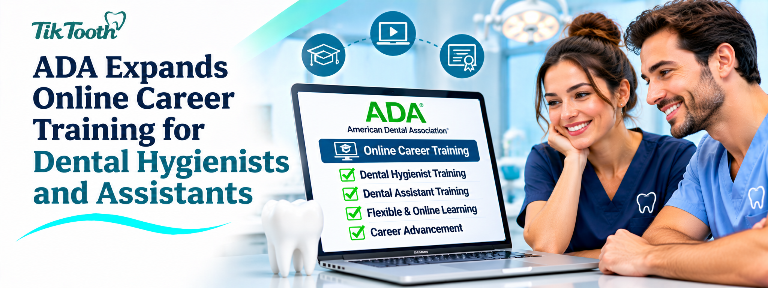
The American Dental Association (ADA) has expanded access to its Community Dental Health Coordinator (CDHC) Program, creating additional educational opportunities for dental hygienists and dental assistants.
According to an October 2026 ADA News announcement, the program is now available directly to practicing dental hygienists and dental assistants through a fully online, asynchronous course.
The updated format allows eligible dental professionals to complete training without attending regularly scheduled in-person classes.
Community Dental Health Coordinators help individuals and families navigate the oral healthcare system.
Their responsibilities may include providing evidence-based oral health information, identifying barriers to treatment, connecting patients with dental practices, and helping communities understand available healthcare resources.
These professionals can play an important role in supporting patients who face financial, geographic, or informational barriers to receiving dental care.
Previously, some dental hygiene and dental assisting programs incorporated ADA-licensed CDHC educational materials into their curricula.
Beginning in September 2026, practicing dental hygienists and assistants gained the ability to enroll directly through the ADA.
This change provides an additional professional development pathway for individuals already working in dentistry.
The course focuses on skills associated with community health work and patient navigation.
Community Dental Health Coordinators can help connect underserved populations with preventive services and appropriate dental treatment.
By providing information and facilitating access to care, these professionals may help reduce gaps between available healthcare resources and patients who need them.
The ADA highlighted examples of community health organizations using CDHC-trained personnel to strengthen patient education and outreach.
Professional development programs can help dental team members broaden their skills and explore additional responsibilities.
Dental employers, community health centers, and educational institutions may benefit from greater awareness of these training pathways.
Digital career platforms could complement such initiatives by helping professionals discover relevant training programs and employment opportunities.
The ADA's expansion of online CDHC training illustrates how flexible education can support workforce development and community oral health.
Strengthening professional skills and improving connections between patients and providers can contribute to a more accessible dental healthcare system.
Source: Independently written based on ADA News reporting, October 2026.
Original Source: https://adanews.ada.org/ada-news/2026/october/ada-expands-cdhc-program-as-online-course-available-directly-to-hygienists-assistants/
Discover TikTooth's vision for a connected U.S. dental workforce through free AI job matching, dental career networks, and industry collaboration.
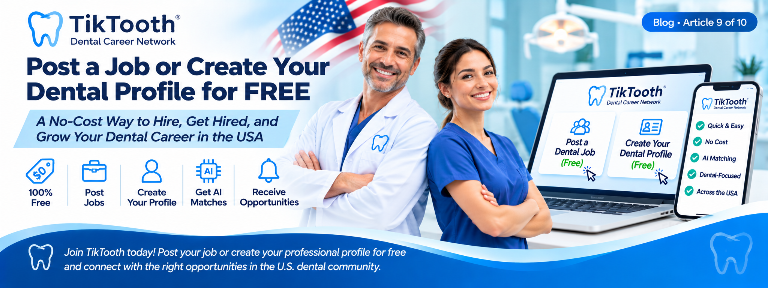
Post dental jobs for free on TikTooth. Discover AI-matched candidates, create free job seeker profiles, and connect with dental clinics across the USA.
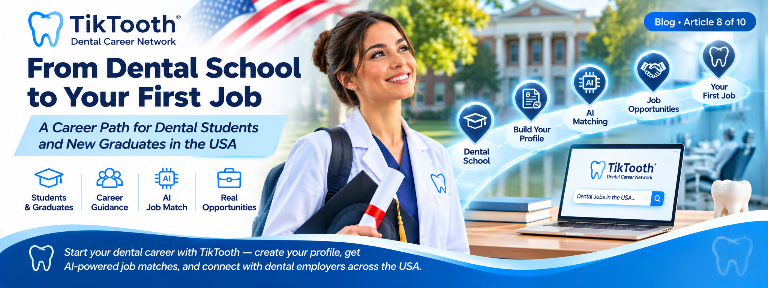
Starting your dental career? TikTooth helps new graduates find dental jobs through free AI matching, career profiles, and connections with U.S. clinics.
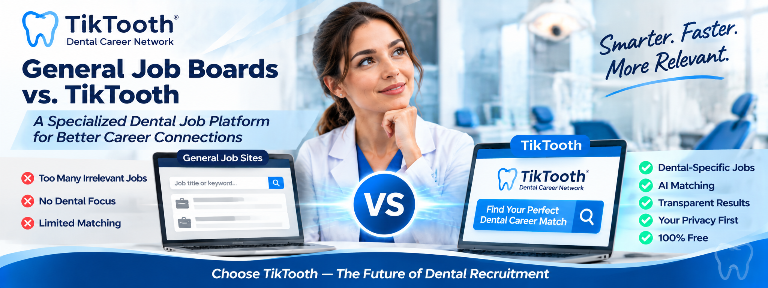
Explore how TikTooth's free AI dental job board adds match scores, skills-based discovery, location flexibility, and candidate-controlled privacy to hiring.
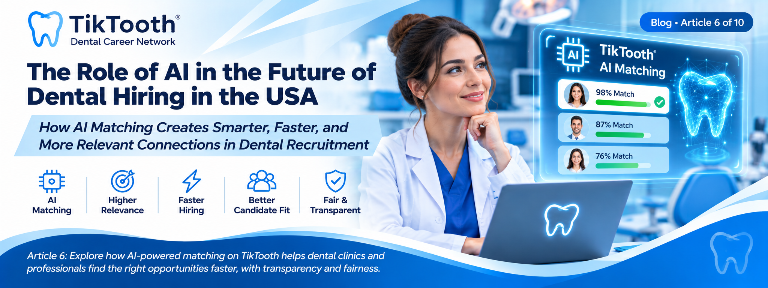
Discover how TikTooth uses AI to match dental professionals with clinics through compatibility scores, skills, salary, location, and private profiles.
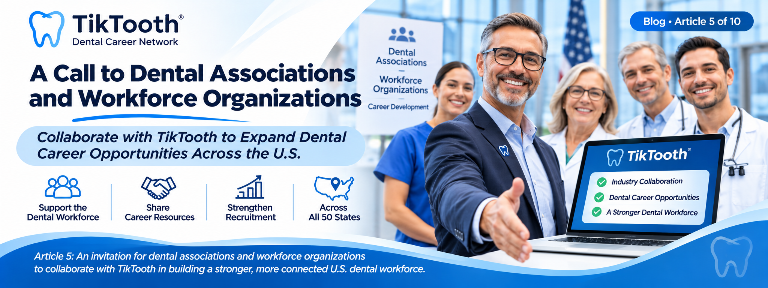
TikTooth invites dental associations and workforce organizations across all 50 states to explore partnerships supporting free AI-powered dental recruitment.